
CNC Routing vs CNC Mills: Key Differences Explained
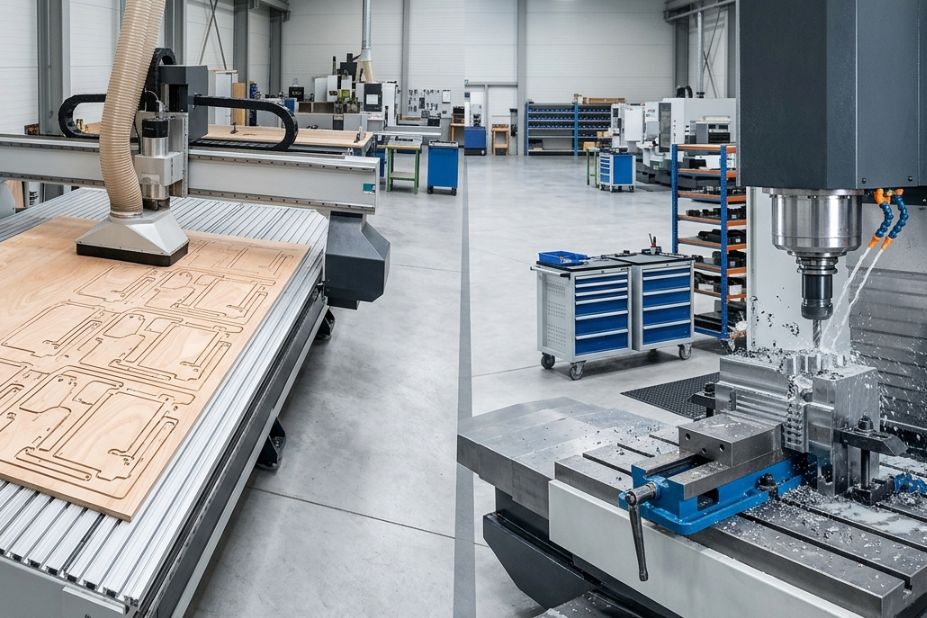
Choosing between CNC routing and CNC milling depends on the material you are machining, the required precision, and the complexity of your project. While both use computer-controlled cutting technology, they are designed for different applications.
CNC routers excel at cutting timber, plastics, composites, and sheet materials quickly, whereas CNC mills are built for machining metals and producing highly accurate, precision-engineered components.
Although CNC routing and CNC milling may appear similar because both use computer-controlled cutting tools, they serve different purposes. Understanding where each process excels helps businesses choose the most suitable solution for their manufacturing needs.
What is CNC Routing?
This is a subtractive manufacturing process where a rotating cutting tool removes material from a workpiece according to a digital design. CNC routers are primarily designed for:- Timber
- MDF
- Plywood
- Acrylic
- Plastics
- Aluminium composite panels (ACP)
- Foam
- PVC
- Signage materials
- Composite sheets
- Cabinet making
- Shopfitting
- Furniture manufacturing
- Signage
- Interior fit-outs
- Architectural panels
- Exhibition displays
What is CNC Milling?
This is yet another subtractive manufacturing process, but it is engineered for higher rigidity and greater precision. Instead of focusing on large sheet materials, CNC milling machines remove material from blocks of metal or engineering plastics using multiple cutting axes. This makes CNC milling ideal for:- Complex engineering components
- Tight tolerance parts
- Precision tooling
- Mechanical assemblies
- Automotive components
- Aerospace components
- Medical equipment
CNC Router vs CNC Milling Machine
| Feature | CNC Router | CNC Mill |
| Primary Material | Wood, plastics, composites | Metals, engineering plastics |
| Machine Rigidity | Medium | Very high |
| Cutting Speed | Faster | Slower |
| Precision | Good | Excellent |
| Typical Tolerance | ±0.2–0.5 mm | ±0.01–0.05 mm |
| Spindle Speed | Higher RPM | Lower RPM, higher torque |
| Cost | Lower | Higher |
| Applications | Panels, cabinetry, signage | Engineering parts |
What is a CNC Mill Used For?
A CNC mill is designed to manufacture components requiring exceptional accuracy and structural integrity. Common applications include: Precision Engineering Manufacturing mechanical components with exact dimensions. Aerospace Creating lightweight yet highly accurate aluminium and titanium parts.Automotive Industry
Producing:- Engine parts
- Gear housings
- Transmission components
- Brackets
Tool and Die Making
Producing moulds, dies and precision tooling.Medical Industry
Manufacturing:- Surgical instruments
- Medical devices
- Orthopaedic implants
CNC Router vs Milling Machine Accuracy
While both machines offer excellent repeatability, CNC mills generally achieve much tighter tolerances because of:- Heavier Construction: A rigid frame reduces vibration.
- Ball Screw Systems: Many CNC mills use precision ball screws rather than rack-and-pinion systems.
- Greater Cutting Force: Mills can machine harder materials without sacrificing dimensional accuracy.
- Better Tool Stability: Reduced tool deflection produces smoother finishes.
Can a CNC Router Replace a Mill?
A CNC router performs exceptionally well when machining:- Timber
- MDF
- Acrylic
- Plastics
- Composite sheets
- Greater rigidity
- Higher torque
- Slower cutting speeds
- Better vibration control
CNC Milling Materials List
One of the advantages of CNC milling is its versatility across engineering materials. The common CNC milling materials list includes:Metals
- Aluminium
- Mild steel
- Stainless steel
- Brass
- Copper
- Titanium
- Tool steel
Plastics
- Nylon
- Delrin
- Acetal
- PEEK
- PTFE
Engineering Materials
- Carbon fibre composites
- High-density engineering polymers
CNC Routing Materials List
A CNC router is ideal for cutting large sheets efficiently. Typical CNC routing materials list includes:Timber
- Hardwood
- Softwood
- Plywood
- MDF
- Particleboard
Plastics
- Acrylic
- PVC
- HDPE
- Polycarbonate
Composite Materials
- ACM
- ACP
- Dibond
- Foam board
Other Materials
- Corflute
- Signage panels
- Laminates
- Decorative panels
Which Is Better for Wood: Router or Mill?
For most woodworking applications, CNC routing is the better choice. Reasons include:- Routers operate at higher spindle speeds.
- Ideal for full-sized timber sheets.
- Production is more economical.
- Perfect for cabinetry and furniture manufacturing.
CNC Mill Tolerances vs Router Tolerances
Tolerance refers to how closely the finished part matches the intended dimensions.CNC Router
Suitable for:- Cabinet components
- Decorative panels
- Signage
- Furniture
CNC Mill
Suitable for:- Engineering parts
- Bearings
- Mechanical assemblies
- Precision tooling
CNC Routing Speed vs Milling Speed
CNC Routing
Higher spindle speeds allow rapid cutting of:- MDF
- Timber
- Acrylic
- Foam
- Plastics
CNC Milling
Milling uses slower feed rates to maintain accuracy when cutting harder materials. Although production may take longer, the trade-off is significantly higher precision.Cost of CNC Router vs CNC Mill
CNC Router
Generally:- Lower purchase cost
- Lower maintenance
- Faster production
- Lower tooling costs
- Furniture
- Shopfitting
- Cabinetry
- Signage
CNC Mill
Generally:- Higher machine cost
- Higher tooling costs
- Longer machining times
- Greater engineering capability
- Precision manufacturing
- Metal machining
- Aerospace
- Automotive
- Medical components
Industry Statistics
- According to Grand View Research, the global CNC machine market continues to grow due to increasing automation and demand for precision manufacturing across automotive, aerospace, electronics, and industrial sectors.
- The Australian Bureau of Statistics reports that manufacturing remains a major contributor to Australia’s economy, with advanced manufacturing technologies continuing to improve productivity and precision.
Reach Out to Just Routing for Expert CNC-Related Services
CNC routing is ideal for timber, plastics, composites, and large sheet materials where speed and efficiency are priorities. CNC milling, on the other hand, offers superior rigidity, tighter tolerances, and the ability to machine metals and precision-engineered components. At Just Routing, we provide professional CNC machining solutions tailored to your project requirements. Whether you need high-volume CNC routing for cabinetry, signage, architectural panels, or precision machining advice, our experienced team is here to help. We proudly work with businesses across Brisbane, the Gold Coast, and the Sunshine Coast, delivering reliable manufacturing solutions with quality, accuracy, and exceptional customer service.FAQs
What types of manufacturing mistakes does CNC machining eliminate compared to manual production?
How does a CAD file reduce measurement errors before cutting even begins?
Can CNC machining maintain the same accuracy across hundreds of identical parts in one run?
What happens when a CNC machine detects an error mid-cut?
How does operator involvement affect error rates in CNC production?
Does CNC machining reduce material waste caused by cutting mistakes?
How do I verify the accuracy of CNC-cut parts before they reach my assembly line?
Table of Contents
- What Is the Difference Between CNC Routing and CNC Milling?
- What is CNC Routing?
- What is CNC Milling?
- CNC Router vs CNC Milling Machine
- What is a CNC Mill Used For?
- CNC Router vs Milling Machine Accuracy
- Can a CNC Router Replace a Mill?
- CNC Milling Materials List
- CNC Routing Materials List
- Which Is Better for Wood: Router or Mill?
- CNC Router vs Milling Machine Accuracy
- CNC Mill Tolerances vs Router Tolerances
- CNC Routing Speed vs Milling Speed
- Cost of CNC Router vs CNC Mill
- Industry Statistics
- Reach Out to Just Routing for Expert CNC Related Services
- FAQs
