
What Is Subtractive Manufacturing in CNC Milling?
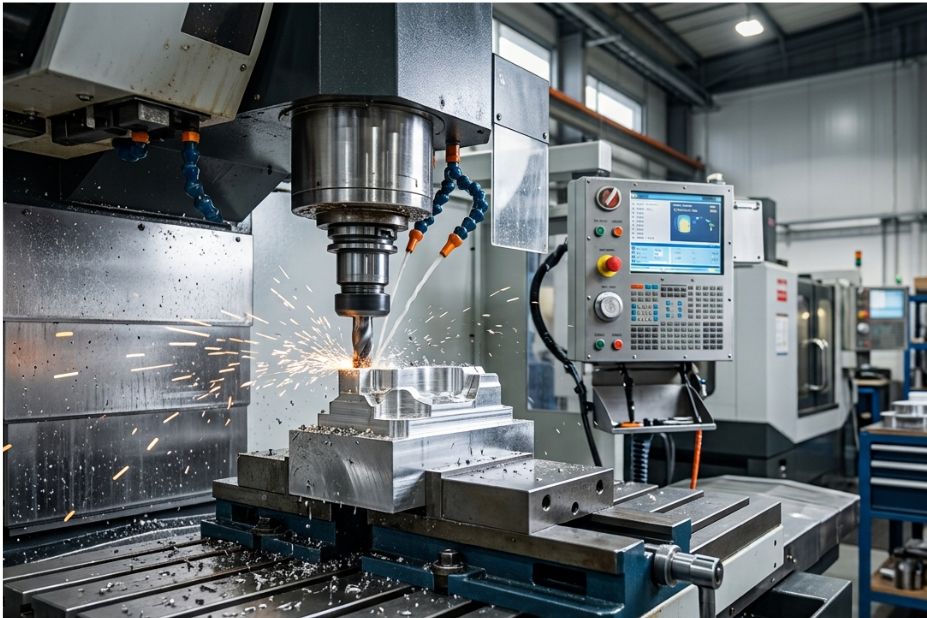
Subtractive manufacturing remains the preferred choice for producing high-precision components across industries because it delivers excellent dimensional accuracy, superior surface finishes, and compatibility with a wide range of materials.
Whether you’re comparing subtractive vs additive manufacturing, exploring CNC milling as a subtractive manufacturing example, or deciding between CNC machining and 3D printing, understanding how subtractive manufacturing works will help you choose the right production method for your project.
What is Subtractive Manufacturing?
This is the process of creating parts by removing unwanted material from a larger workpiece until the desired shape is achieved. Unlike additive manufacturing, which builds objects by adding material layer by layer, subtractive manufacturing begins with a solid block of material and removes excess material using cutting tools. Common subtractive manufacturing processes include:- CNC milling
- CNC turning
- Grinding
- Drilling
- Boring
- Sawing
How Does CNC Milling Work?
CNC (Computer Numerical Control) milling uses computer-programmed instructions to guide rotating cutting tools that remove material from a workpiece.Step 1: CAD Design
The part is designed using CAD (Computer-Aided Design) software.Step 2: CAM Programming
The CAD model is converted into machine instructions (G-code).Step 3: Material Setup
The selected material is securely clamped to the milling machine.Step 4: Machining
The cutting tools gradually remove material according to the programmed toolpaths.Step 5: Inspection
Finished components are measured to verify dimensions and quality. Because the entire process is digitally controlled, CNC milling consistently produces repeatable, high-quality parts.How Material is Removed in CNC Milling
Material removal occurs through high-speed rotating cutting tools that shave away small amounts of material during each pass. Several cutting operations include:- Face Milling: Removes material from the top surface.
- Slot Milling: Cuts grooves or channels.
- End Milling: Produces profiles, pockets, and intricate shapes.
- Pocket Milling: Removes material from enclosed areas.
- Drilling: Creates accurate holes.
CNC Milling as a Subtractive Manufacturing Example
The process starts with a solid aluminium billet. The CNC machine removes excess material until only the finished housing remains. During machining, the machine creates:- Mounting holes
- Precision pockets
- Flat surfaces
- Internal cavities
- Complex contours
Subtractive Manufacturing Materials List
One major advantage of subtractive manufacturing is its compatibility with numerous engineering materials. Common subtractive manufacturing materials include:Metals
- Aluminium
- Stainless steel
- Mild steel
- Brass
- Copper
- Titanium
- Tool steel
Plastics
- ABS
- Nylon
- Delrin (Acetal)
- PEEK
- Polycarbonate
- PTFE
Composites
- Carbon fibre composites
- Fibreglass
- Engineering laminates
Wood
- MDF
- Hardwood
- Plywood
- Strength requirements
- Weight
- Corrosion resistance
- Temperature resistance
- Cost
- Surface finish
Subtractive vs Additive Manufacturing Comparison
| Feature | Subtractive Manufacturing | Additive Manufacturing |
| Process | Removes material | Adds material |
| Strength | Excellent | Depends on process |
| Surface Finish | Very smooth | Often requires finishing |
| Accuracy | Extremely high | Moderate to high |
| Production Speed | Fast for production | Better for prototypes |
| Material Options | Very wide | More limited |
| Waste | More material waste | Minimal waste |
Subtractive vs 3D Printing for Parts
CNC Milling is Better For:- Production components
- Tight tolerances
- Metal parts
- High-strength applications
- Long-lasting components
- Concept models
- Rapid prototypes
- Complex internal structures
- Low-volume custom designs
Industries That Use Subtractive Manufacturing
Many industries rely heavily on subtractive manufacturing because of its precision and repeatability. Aerospace Manufactures:- Aircraft brackets
- Structural components
- Engine parts
Automotive
Produces:- Engine blocks
- Transmission housings
- Suspension components
Medical
Machines:- Surgical instruments
- Orthopaedic implants
- Medical equipment
Mining
Creates:- Heavy-duty machine components
- Wear-resistant parts
Defence
Produces highly accurate precision components.Electronics
Manufactures:- Heat sinks
- Enclosures
- Precision housings
Industrial Equipment
Produces custom machine components and replacement parts. According to the Australian Bureau of Statistics (ABS), advanced manufacturing continues to play an important role in Australia’s industrial economy, with precision engineering and high-value manufacturing supporting sectors such as aerospace, defence, medical technology and mining.Subtractive Manufacturing Advantages and Disadvantages
AdvantagesExceptional Precision
CNC machines can consistently produce highly accurate components.Excellent Surface Finish
Many parts require minimal secondary finishing.Wide Material Compatibility
Almost any engineering material can be machined.High Structural Strength
Since parts are machined from solid stock, material properties remain intact.Fast Production
Modern CNC machines produce components quickly with minimal manual intervention.Disadvantages
Material Waste
Removed material becomes chips that require recycling or disposal.Higher Material Usage
Large billets may generate considerable waste for complex parts.Tool Wear
Cutting tools require maintenance and replacement over time.Geometry Limitations
Some intricate internal geometries are easier to achieve using additive manufacturing.Subtractive Manufacturing Cost vs Additive Manufacturing
Cost depends on:- Part complexity
- Material
- Batch size
- Machine time
- Surface finish
- Tolerance requirements
- Medium-to-high production volumes
- Precision engineering
- Metal parts
- Functional components
- One-off prototypes
- Product development
- Concept validation
- Low-volume custom parts
Why CNC Milling Remains an Industry Standard
Despite rapid advancements in additive manufacturing, CNC milling remains the preferred manufacturing method for countless applications. Reasons include:- Outstanding dimensional accuracy
- Excellent repeatability
- High-quality surface finishes
- Broad material compatibility
- Proven reliability
- Efficient production for small and large batches
Partner with Just Routing for Professional CNC Milling & More
At Just Routing, we specialise in delivering high-quality CNC machining and routing solutions tailored to your exact requirements. Whether you need prototypes, custom components, or production runs, our experienced team combines advanced CNC technology with precision craftsmanship to achieve outstanding results. We proudly support businesses across Brisbane, the Gold Coast, and the Sunshine Coast, providing reliable machining solutions that meet the highest standards of quality and performance. Contact us now for more details.FAQs
Is subtractive manufacturing good for prototyping or only for mass production?
Subtractive manufacturing is ideal for both prototyping and mass production. CNC milling produces accurate prototypes for testing and delivers consistent, repeatable parts for low, medium, or high-volume manufacturing with excellent dimensional precision.
Can subtractive manufacturing produce complex or curved shapes?
Yes. Modern CNC milling and routing machines can produce complex geometries, curved surfaces, pockets, and intricate profiles. The level of complexity depends on the machine’s axes, tooling, and the part’s design requirements.
What is the difference between CNC milling and CNC routing in subtractive manufacturing?
CNC milling typically machines metals and engineering plastics using rigid cutting tools, while CNC routing is commonly used for timber, MDF, plastics, aluminium composite panels, and sheet materials at higher cutting speeds.
How much material waste does subtractive manufacturing produce?
Material waste varies depending on the part design and starting stock size. While subtractive manufacturing removes excess material, many metal and plastic offcuts can be recycled, helping reduce environmental impact and material costs.
What software or files are needed to start a subtractive manufacturing (CNC milling) job?
Most CNC milling projects begin with CAD files in STEP, IGES, DWG, DXF, or STL format. These are converted into machine toolpaths using CAM software before machining starts.
How long does it take to get parts made using subtractive manufacturing?
Yes, thread milling is highly suitable for blind holes. It offers improved chip control and reduces the risk of tool breakage, making it a reliable option for both blind and through holes.
Is subtractive manufacturing suitable for both metal and timber/panel components?
Yes. Subtractive manufacturing is suitable for metals such as aluminium and steel, as well as timber, plywood, MDF, acrylic, engineering plastics, and composite panels, making it highly versatile across industries.
Where can I get subtractive manufacturing or CNC milling services done in Australia?
You can access professional subtractive manufacturing and CNC milling services through specialised machining companies like Just Routing, offering precision machining, CNC routing, custom components, and production solutions for businesses across Australia.
Table of Contents
- Introduction
- What is Subtractive Manufacturing?
- How Does CNC Milling Work?
- How Material is Removed in CNC Milling
- CNC Milling as a Subtractive Manufacturing Example
- Subtractive Manufacturing Materials List
- Subtractive vs Additive Manufacturing Comparison
- Subtractive vs 3D Printing for Parts
- Industries That Use Subtractive Manufacturing
- Subtractive Manufacturing Advantages and Disadvantages
- Subtractive Manufacturing Cost vs Additive Manufacturing
- Why CNC Milling Remains an Industry Standard
- Partner with Just Routing for Professional CNC Milling & More
- FAQs
